
在新能源技术突飞猛进的今天,电解液被形象地称为电池的“血液”。而在成分复杂的电解液配方中,添加剂虽然占比极小,却决定了电池的安全性、寿命和能量密度。盐酸胍(Guanidine Hydrochloride),正从生物生化领域跨界而来,成为电池材料工程师手中的“性能调节利器”。
In the rapidly evolving landscape of new energy technology, the electrolyte is often described as the “blood” of the battery. Within complex electrolyte formulations, although additives make up a tiny fraction, they dictate the battery’s safety, lifespan, and energy density. Guanidine Hydrochloride (GndCl) is now crossing over from biochemistry to become a powerful performance-tuning tool for battery material engineers.
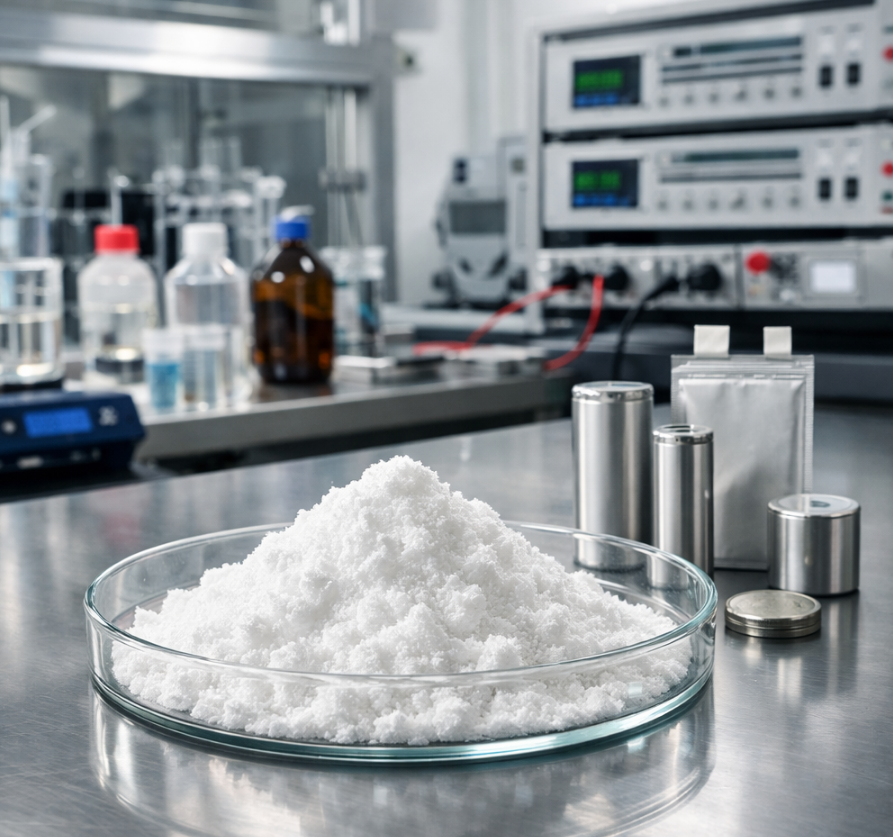
锂电池界面的“隐形铠甲”
The “Invisible Armor” of Lithium-ion Interfaces
在锂离子电池中,固体电解质界面(SEI)膜的质量直接关系到电池的循环稳定性。盐酸胍作为添加剂,能参与形成更加致密且均匀的SEI膜,显著改善界面接触。这不仅降低了界面阻抗,更重要的是,它能通过调节电流分布有效抑制锂枝晶的生长。对于追求高能量密度的体系来说,这无疑是提升安全上限的关键。
In lithium-ion batteries, the quality of the Solid Electrolyte Interphase (SEI) film is directly linked to cycling stability. As an additive, Guanidine Hydrochloride participates in the formation of a denser and more uniform SEI layer, significantly improving interfacial contact. This not only reduces interfacial impedance but, more importantly, effectively suppresses lithium dendrite growth by regulating current distribution. For systems pursuing high energy density, this is undoubtedly key to raising the safety ceiling.
钠离子电池:破解低温与动力学难题
Sodium-ion Batteries: Solving Low-Temperature and Kinetic Hurdles
钠离子电池因资源丰富、成本低廉而备受关注,但钠离子较大的半径导致其穿梭动力学较慢。盐酸胍的引入,能有效调控电解液的溶剂化结构,降低钠离子的脱溶剂化能垒。这意味着即使在寒冷的冬季或低温环境下,钠离子电池依然能保持出色的倍率性能和电荷传输效率。
Sodium-ion batteries (SIBs) are gaining attention due to resource abundance and low cost, but the larger radius of sodium ions leads to sluggish shuttle kinetics. The introduction of Guanidine Hydrochloride effectively modulates the solvation structure of the electrolyte, lowering the desolvation energy barrier for sodium ions. This means that even in cold winters or low-temperature environments, SIBs can maintain excellent rate performance and charge transport efficiency.
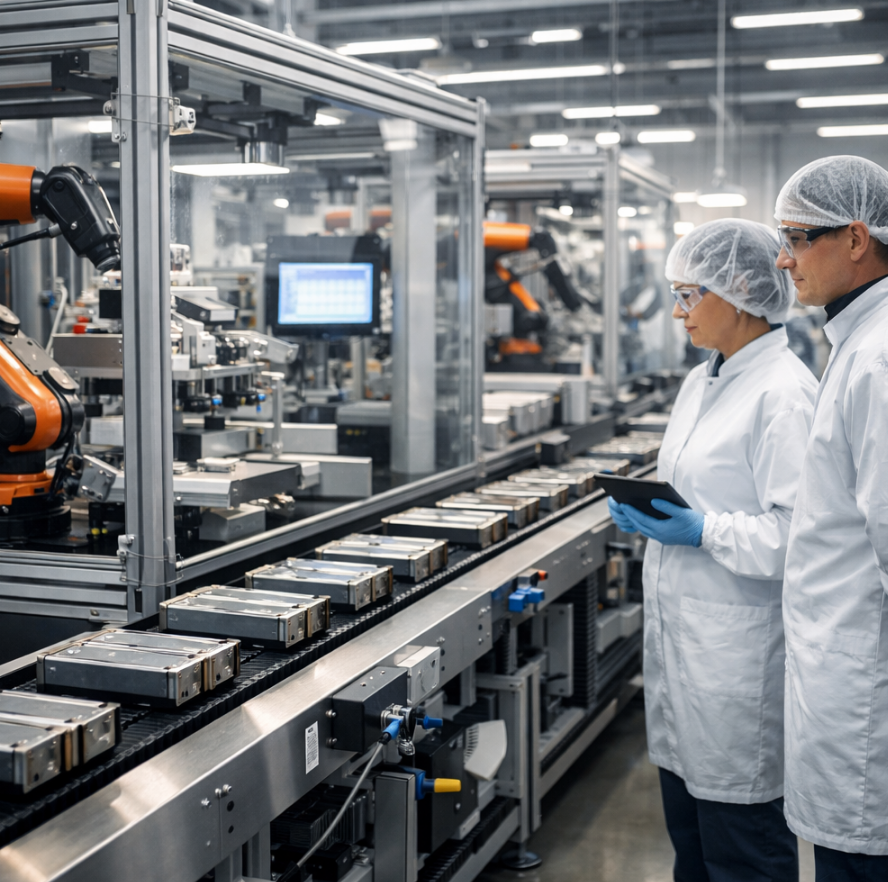
锂硫电池:拦截多硫化物的“穿梭效应”
Lithium-Sulfur Batteries: Intercepting the Polysulfide “Shuttle Effect”
锂硫电池以极高的理论能量密度被视为“下一代战神”,但多硫化物的穿梭效应一直限制其商业化。盐酸胍分子中富含的胍基阳离子,能通过强力的静电引力和氢键作用,将多硫化物牢牢锚定在正极区域。这种化学拦截机制,极大缓解了容量衰减问题,让长寿命锂硫电池离我们更近了一步。
Lithium-Sulfur (Li-S) batteries are regarded as the “next-generation powerhouse” due to their ultra-high theoretical energy density, but the shuttle effect of polysulfides has long hindered commercialization. The guanidinium cations abundant in GndCl molecules can firmly anchor polysulfides in the cathode region through strong electrostatic attraction and hydrogen bonding. This chemical interception mechanism greatly alleviates capacity decay, bringing long-life Li-S batteries one step closer to reality.
水系电池与钙钛矿光伏的新可能
New Possibilities for Aqueous Batteries and Perovskite Photovoltaics
除了传统的液态电池,盐酸胍在水系电池中也能发挥奇效。它能破坏水分子的氢键网络,显著拓宽电化学稳定窗口,抑制析氢反应的发生。而在钙钛矿太阳能电池领域,它作为优异的钝化剂,能修复薄膜表面的原子缺陷,提升光电转换效率(PCE)的同时,增强了器件在潮湿环境下的耐久性。
Beyond traditional liquid batteries, Guanidine Hydrochloride works wonders in aqueous batteries. It can disrupt the hydrogen-bonding network of water molecules, significantly widening the electrochemical stability window and suppressing the hydrogen evolution reaction. In the field of perovskite solar cells, it serves as an excellent passivating agent, healing atomic defects on the film surface to boost power conversion efficiency (PCE) while enhancing device durability in humid environments.
结语:从小分子到大产业
Conclusion: From Small Molecules to Massive Industries
盐酸胍在新能源领域的应用,证明了基础材料通过跨界创新能迸发出巨大的技术红利。随着全球对更高性能电池体系的渴求,这种具有多功能调节特性的添加剂,必将在未来的储能版图中占据重要一席。
The application of Guanidine Hydrochloride in the new energy sector proves that basic materials can spark massive technical dividends through cross-border innovation. As global demand for higher-performance battery systems grows, this additive with multifunctional regulatory properties is bound to occupy a significant position in the future energy storage landscape.
