
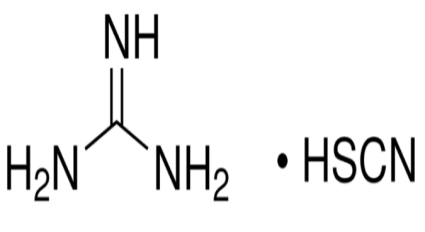
Introduction: Guanidine thiocyanate, with a chemical formula of C5H12N4S, is a potent chemical reagent widely utilized in biochemical and molecular biology research. Its molecular structure, H2N(C(NH)NCSNH2)2, is formed through the reaction between thiocyanic acid and hexamethylenediamine. Guanidine thiocyanate is valued for its ability to denature proteins, extract nucleic acids, and facilitate various biochemical assays.
Product Features:
Guanidine thiocyanate typically appears as a white crystalline solid, soluble in water and common organic solvents. It possesses significant chaotropic properties, disrupting the structure of proteins and nucleic acids. With amino (-NH2) and thiocyanate (-NCS) functional groups, guanidine thiocyanate exhibits strong denaturing activity, making it a powerful reagent in biochemical research.

Applications:
Nucleic Acid Extraction: Guanidine thiocyanate is widely used in molecular biology for the extraction and purification of nucleic acids from biological samples. It disrupts the hydrogen bonds between nucleic acid bases, enabling their isolation from other cellular components.
Protein Denaturation: In biochemical assays and protein purification processes, guanidine thiocyanate is employed for protein denaturation and solubilization. It disrupts the native structure of proteins, facilitating their analysis and purification.

PCR Assays: Guanidine thiocyanate is utilized as a chaotropic agent in polymerase chain reaction (PCR) assays, aiding in the denaturation of DNA strands and enhancing the efficiency of DNA amplification.
RNA Stabilization: Guanidine thiocyanate is used in RNA stabilization solutions to preserve RNA integrity and prevent degradation during storage and transportation.
Conclusion:
Guanidine thiocyanate emerges as a potent and versatile chemical reagent with diverse applications in biochemical and molecular biology research. Its ability to denature proteins, extract nucleic acids, and stabilize RNA underscores its importance in various laboratory procedures and diagnostic assays.
View More Articals via www.fyyschemistry.com.
